
When Art Doesn’t Need Technology
While safeguarding the future of the arts is critical in a new creative economy, we must remember that technology works best when in the service of the creative process.

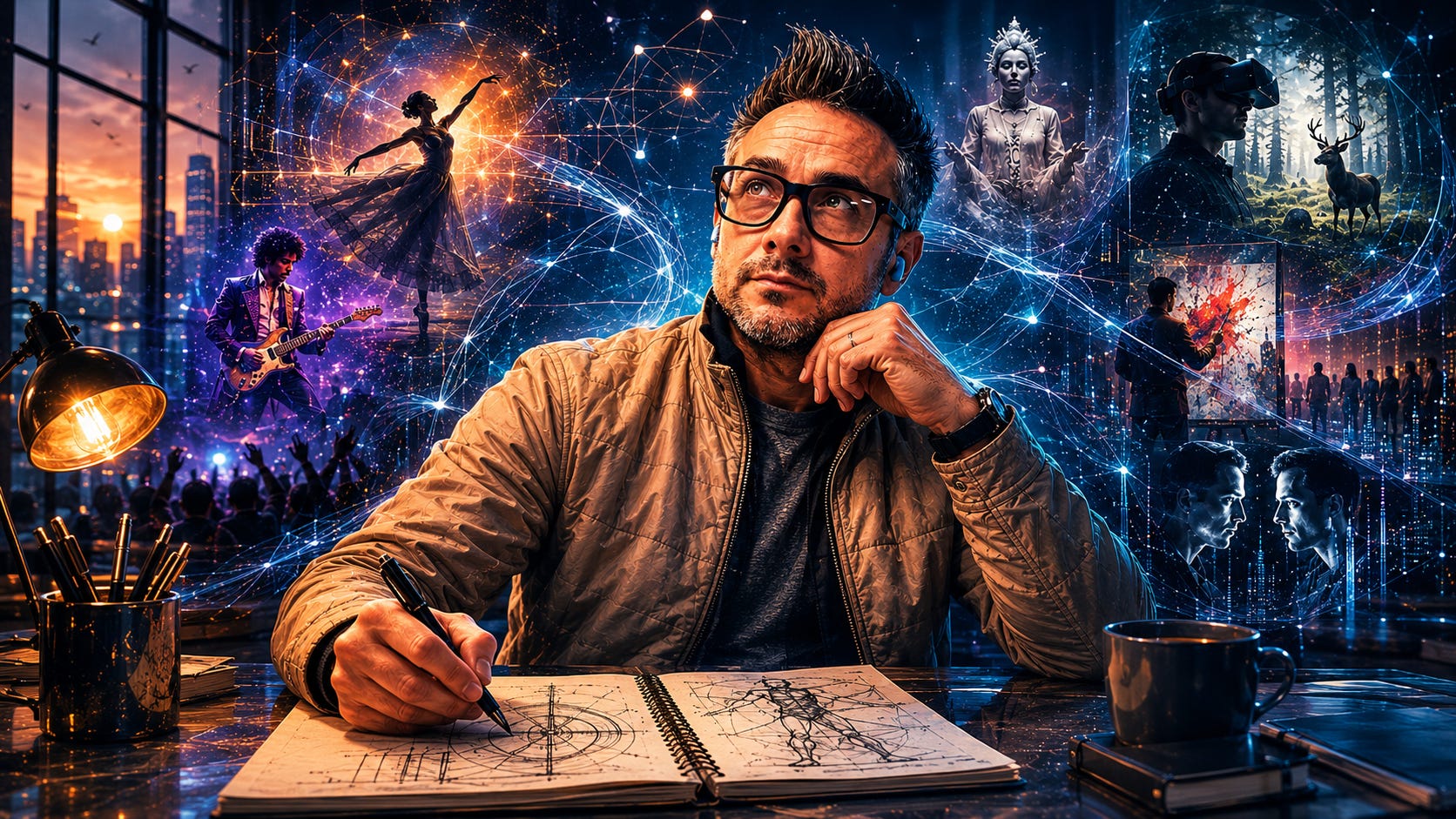
It is tempting to look at the state of creativity today and conclude that technology is everything. The direction of travel in government policy, research funding, and the economics of the creative industries more widely are all clearly reinforcing the need to safeguard the future of creativity through technological innovation.
Just last week Spotify made a bold announcement that it will allow users to create AI mixes of artist tracks; a move which has divided the sector in a way that isn’t so far from the outcry when Netflix announced allowing viewers to watch on 1.5x or 2x speed.
The integrity of the artistic work is in jeopardy and these examples cause considerable worries about the loss of artistic appreciation. At the same time, episodic, AI-generated,vertical micro dramas are on the rise in streaming platforms and there is fascination for how audiences might yet evolve around new creative possibilities.
Yet, when I think about the most remarkable experiences of art that I have encountered, technology is often nowhere to be seen or, at least, not obviously. The creative challenge posed by technology is often to find a way for it to add value, without becoming the story.
When Google launched Glass in 2013, it created widespread debate, with views ranging from how it would transform everything about the human-computer interface, to it being the beginning of the end for personal privacy. Yet, their vision for Glass offered a compelling way of thinking about the role of technology in creative innovation.
In Google’s keynote presentations about the product, the design team stated that they wanted Glass to “take technology out of the way”. The product would sit on the wearer’s head like a pair of spectacles, with the digital projection lens just above the line of sight, not getting in the way, but accessible.
It also came with some remarkable features, afforded by this design, such as the ability to take photographs with just the wink of an eye; or to push Google Maps through the prism, which optimised the cycling or walking wayfinding experience, far better than anything else, still.
This desire to take technology out of the way speaks volumes to my own appreciation for how we should think through the relationship between art and technology. My early philosophical work in this area speaks of technology as a concept that describes, principally, an environmental configuration, or what we might call context.
In this way, technology is the stuff in which the substance of life sits, in order to allow it to flourish, but it is, crucially, not the narrative itself. Indeed, when technology becomes the narrative, we are often left with quite simplistic stories about the future, which distract us from the more interesting discussions to be had about technology. The difference between these two ways of engaging technology are reflected in the difference, say, between James Cameron’s The Terminator (1985) and Caryl Churchill’s A Number (2002).
In the former, we find the classic narrative of a dystopian technological future and humanity’s pursuit of overcoming its hubris in order to safeguard what is known to really matter, the emotional ties people have towards one another. In the latter, we find a story about humanity, a predominantly two-person play, focused on a conversation between a father and his son, who has just discovered he is a clone. Churchill takes us into the complexity of what a technological future might be like, but does so in a way that is about the human experience, not the technology.
While much of my work focuses on technological change, the thread across everything I write is the moral and ethical consequence of such change and this anchor is what keeps me open minded, optimistic, but also cautious not to overstate the importance of technology, or to advocate its purpose for its own sake.
Innovation is not synonymous with technological integrations, even if it can sometimes seem that way. In the creative industries, innovation can include changing the ecosystem so that more voices are represented and part of the sector and this is among the most important challenges we face.
We are at a crucial moment in the history of creativity, where we need to occupy the right mindset to safeguard its future while also protecting and preserving the possibility of having the kinds of experiences that only art allows.
Over the last 3 years, I have seen anger, upset, despair, and frustration at the consequence of the imposition of technological innovation in the arts; a growing disdain for the rise of artificial intelligence among many creatives, accompanied by some hopeful ambition that it - like many other technological revolutions - will bring a productive re-imagination of what creativity could become. Among these communities, it is not just the prospect of losing a livelihood from creative transformation, but the loss of an art form that may slide into obscurity, as a result of this change.
So, to remind us why technology isn’t already needed to deliver better art, here are some of the most remarkable memories of art I have encountered in my life where technology did not get in the way.
2000, Cybersingle, Prince
2002, A brief history of time, Vanishing Point [theatre]
2002, A Number, Caryl Churchill [tv,]
2005, The End of the Moon, Laurie Anderson [theatre]
2012, The Artist is Present, Marina Abramovich [documentary];
2015, In the eyes of the animal, Marshmallow Laser Feat [VR]
2020, Game Changer, Banksy [gallery]
2024, What was I made for? Billie Ellish [video+music]
2024, Grand Theft Hamlet, Pinny Grylls & Sam Crane [film],
2025, Hamlet, Hail to the Thief, Royal Shakespeare Company [theatre]
There are a hundred other examples, I could add here, but these are what came to mind this morning and they managed to achieve the status of lifetime memories. I’d love to know what other artistic experiences you’ve encountered that became life time memories and which demonstrated that technology is at its best when it is taken out of the way.